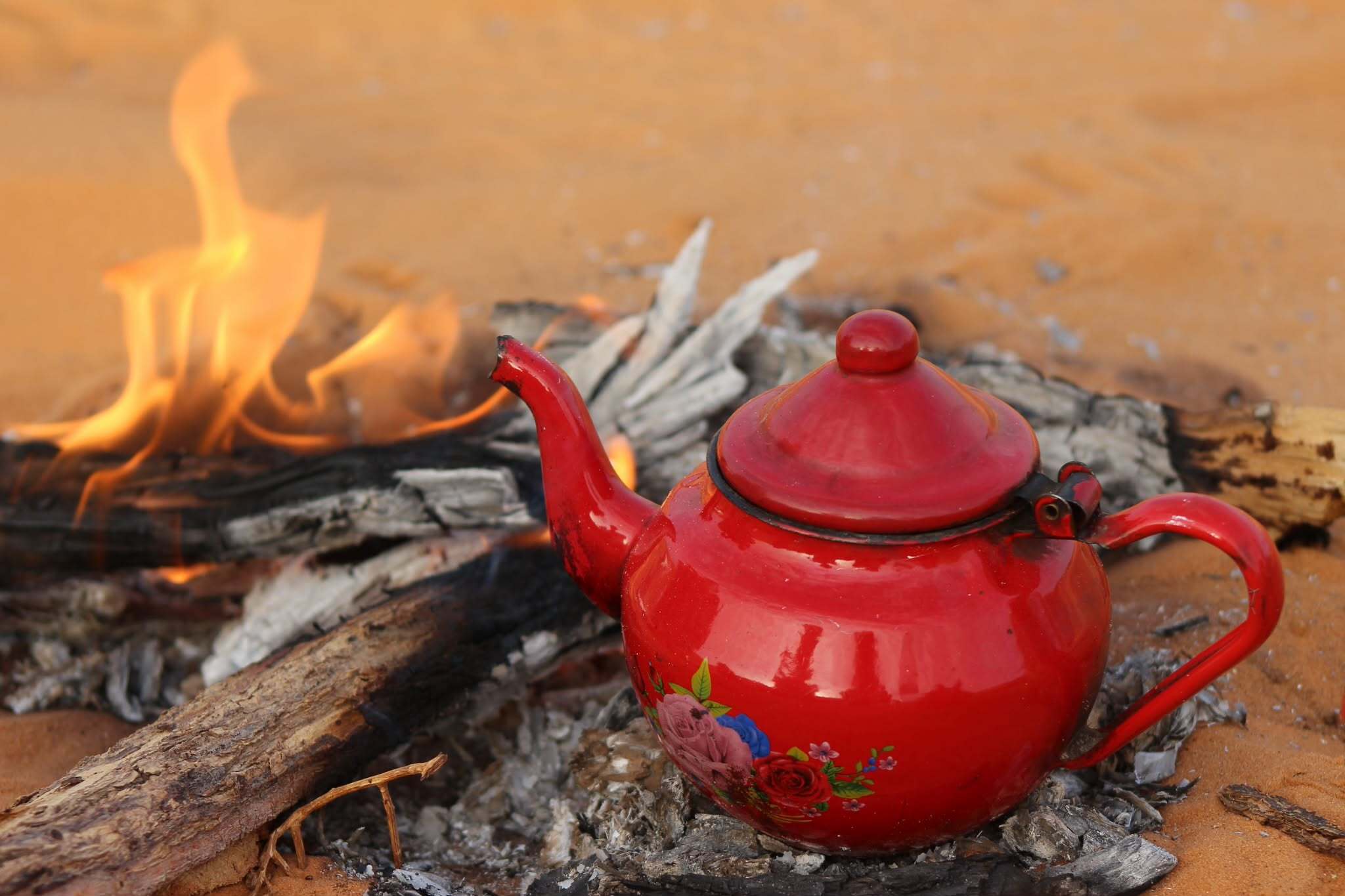
Making tea is a true ceremony in Tuareg culture. It is one of the best moments of the day, a moment suspended in the heat of the Sahara where tradition, hospitality and sharing come together.
Much more than just a drink, tea is a fundamental social ritual for the Tuareg people.
The Origins of Tea in the Tuareg World
Green tea, as we know it today, first appeared in the Maghreb in the late 17th century. It was introduced to Morocco at the court of Sultan Moulay Ismaïl by English merchants from the British East India Company. Gradually, it became a royal institution, and later a popular drink consumed throughout the kingdom.
It was from the 1940s onwards that tea reached the Sahara, carried by caravans and trade. The Tuaregs then adopted this drink and gave it a unique place in their daily lives. Prepared without mint leaves, it is stronger, almost bitter, with a characteristic caramel colour. This Saharan version of tea is now a powerful symbol of nomadic culinary identity.
A proverb sums up the importance of this drink in desert life: ‘Water is life, milk is survival, tea is the national drink.’
The ritual of the three teas: hospitality and symbolism
Commonly known as “Ataye” in the local dialect, the tea ceremony is strictly observed and carefully passed down through the generations. The head of the family is usually responsible for preparing the tea, which is done in front of the guests as a sign of respect and welcome.
According to a Tuareg proverb, making a good cup of tea requires three essential elements: “Embers, time, friends.”
✦ The stages of the ritual:
The head of the household boils water in a kettle, then adds the green tea leaves.
The water from the first infusion is discarded to rinse the tea.
The leaves are left to infuse again, then transferred to a second teapot containing a lump of sugar.
The tea is then poured back and forth several times between the teapot and a glass to dissolve the sugar and aerate the drink.
It is finally served in small glasses, piping hot, to be sipped in small sips.
This process is repeated three times, without changing the tea leaves, but adding sugar to each infusion.
A powerful symbolism
The Tuaregsnever serve just one glass. One is reserved for God; two would be a sign of forgetfulness; and three symbolise generosity. According to tradition:
The first tea is strong, bitter as life.
The second is milder, sweet as love.
The third, lighter, is smooth as death.
It is acceptable to refuse tea by simply turning your glass upside down. However, out of respect, it is customary to accept all three rounds. A fourth glass would be too much, and a fifth politely indicates that it is time to take one’s leave.
At the end of the ceremony, the chief carefully washes and puts away the glasses. This simple gesture brings the ritual to a close, with the same significance as the preparation.
The tea ceremony is deeply rooted in the daily lives of the Tuareg people of the Sahara, whether they live in the Tassili n’Ajjer, the Ahaggar, or the vast expanses of the Aïr in Niger.
It reflects a nomadic way of life, where human connection is as vital as water or fire.
More than just a moment of conviviality, Saharan tea is a lesson in slowness, respect and social connection – something precious in our all-too-hurried modern lives.