Djanet

Terres Touareg

Djanet, the heart of Tassili n’Ajjer

Discover the history of Djanet, an oasis in the Algerian Sahara, between traditional urban planning and colonial past, in the heart of Tassili n’Ajjer.

A thousand-year-old oasis in the heart of the Sahara

Djanet, capital of Tassili n’Ajjer, has been a municipality in the wilaya of Djanet since 2019, having previously been part of the wilaya of Illizi. This iconic oasis in the Algerian Sahara has a population of around 20,000, mainly from the Tuareg people. Formerly known as Fort Charlet during the colonial period, Djanet is now recognised for its strong Saharan identity and rich history.

The term ‘Djanet’ is often associated with several possible origins, all linked to the beauty and tranquillity of the oasis.
According to a popular explanation, Djanet (or El Djennat) is the plural of Djenna, which means ‘paradise’ in Berber.
Another legend tells of a Targui, searching for his camels, who asked where they were; his companion replied ‘Jennat’, meaning that they were sitting peacefully, which gave the town its name.
Finally, some see a connection with the Arabic Jannat (جنات), which also means ‘gardens’ or ‘paradise’, in reference to the exceptional greenery of the oasis.


A strategic and sacred location

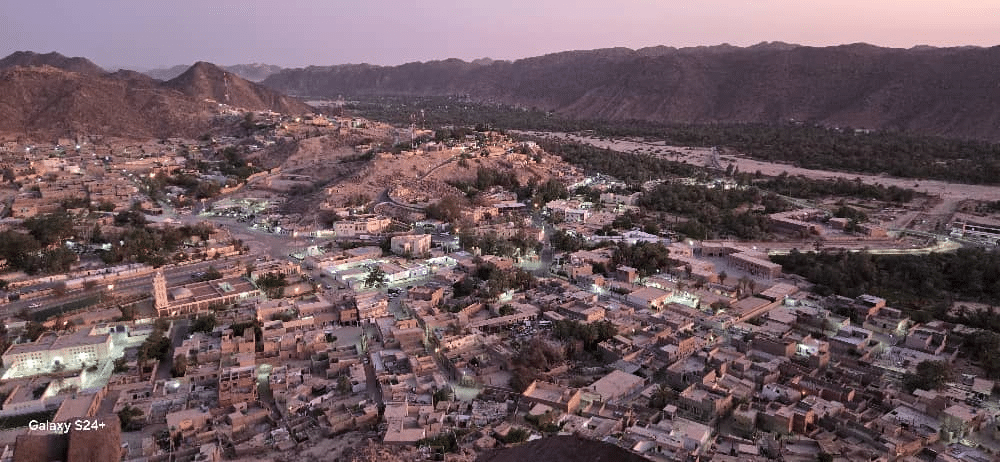
Located 2,300 km south-east of Algiers, near the Libyan border, Djanet is not far from the Ghat oasis and about 200 km from Niger. It is nestled to the east of the Erg Admer, at the foot of the Tassili n’Ajjer plateau, at an altitude of 1,050 metres.

The town is crossed by the Oued Idjeriou (the sea, in Tamasheq), which feeds the palm groves and ensures the fertility of the valley, a veritable lifeline in the desert.
 

A unique urban layout

The traditional urban layout of Djanet developed around three main villages: El-Mihen, Azelouaz and Adjahil, located a few kilometres apart. These villages, perched on granite peaks overlooking the wadi, enjoy a natural defensive position.

Today, Aghoum, In Abarbar and Ifri have been added to these ancient centres, forming an extensive urban fabric that remains anchored in the mineral environment of the desert. The town is watered by numerous springs, allowing date palms and food crops to be grown in the riverbed.

According to oral tradition, Djanet once had as many as 14 villages, most of which were swept away by a flood, forcing the survivors to regroup on higher ground.


A history rooted in prehistory and resistance

Djanet has been inhabited for over 10,000 years, as evidenced by the rock paintings and engravings of Tassili n’Ajjer. This period, known as the African Neolithic, was marked by a more humid climate, abundant wildlife and a flourishing pastoral life.

In the Middle Ages, Djanet was founded by the Tuaregs, the great nomads of the Sahara. Their settlement in the region was accompanied by the development of a way of life adapted to the constraints of the desert, including caravan trade, pastoralism and Saharan rituals.

Between colonisation and resistance

At the beginning of the 20th century, the Ottomans, who had settled in Fezzan (southern Libya), gradually lost their influence as the Europeans advanced. The Italo-Turkish War of 1911 marked their defeat, and the French seized Djanet on 27 November 1911, under the command of Captain Édouard Charlet, head of the Saharan meharist company. Sheikh Amoud Ibn Mokhtar, a figurehead of the Tuareg resistance, was then driven out.

But in 1916, he counterattacked from Ghat with around fifty fighters and temporarily recaptured the town. Djanet did not return to French control until the autumn of 1918, when it was renamed Fort Charlet.


Djanet after independence

On 18 March 1962, the Évian Accords marked the end of the Algerian War. Djanet then regained its original name and Tuareg identity. Today, it remains a powerful symbol of the Tuareg people’s attachment to their land and the resilience of Saharan cultures in the face of historical upheaval.

 Djanet is much more than just a city; it is a living reflection of the history of the Algerian Sahara. With its ancient oases, Tuareg heritage and rock art in Tassili n’Ajjer,
it embodies a unique identity, rooted in the desert and looking towards the future.

Terres Touareg
Privacy Overview

This website uses cookies so that we can provide you with the best user experience possible. Cookie information is stored in your browser and performs functions such as recognising you when you return to our website and helping our team to understand which sections of the website you find most interesting and useful.